

Armagnac
Like Cognac, Armagnac is grape brandy made in a particular region in France, though this region is a bit further to the south. Armagnac uses the same grapes as Cognac, plus the addition of baco blanc. More notably, Armagnac is not pot distilled but rather is distilled in column stills, and it is only distilled once instead of twice. Because of these factors, Armagnac is typically a bit less fruity and more floral than Cognac. Armagnac uses similar VS/VSOP/XO designations for age as Cognac.
Top Armagnac Posts:
What’s the Difference Between Cognac and Armagnac?
Chateau du Tariquet Armagnacs – Blanche, VS Classique, VSOP, XO, and 1993 Vintage
Marquis de Montesquiou Armagnac VSOP and XO

When they said Covid was over, we didn’t think we’d be summarily dropped into a new financial crisis to replace the one we just got out of. The good news is that the holidays have arrived just in time to provide a welcome (if brief) break from yet another year of chaos. At Drinkhacker, we…

Spirits mogul Raj Bhakta’s second act has pushed historic age statements into new territory, with most bottles of his Bhakta 50 Armagnac featuring at least some vintage spirit dating to 1868. The rest comes from various barrels dating between the late 19th and mid-20th centuries, with the youngest vintage produced in 1970. As such, no…

Raj Bhakta‘s eponymous brand tiptoes downmarket and sideways with the launch of 27-07, which adds Calvados to the mix, blending it with Armagnac then finishing it in Islay casks much like the original Bhakta. While the 27-07’s intended age statement—7 years at its youngest, and 27 at its oldest—already placed it among the oldest spirits…
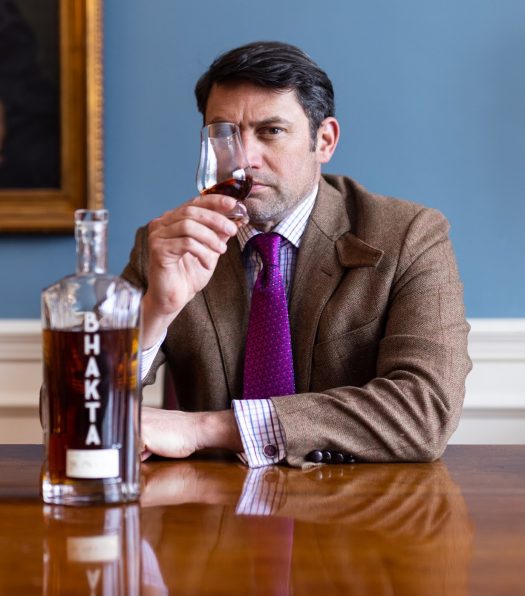
Perennial spirits entrepreneur Raj Bhakta has already cemented himself as one of America’s most ambitious booze salesmen. He founded WhistlePig and helped create an entirely new generation of whiskey drinkers, with a heavy focus on premium rye. His second foray into the premium category took a decidedly upmarket turn with Bhakta, a brand based around…

Armagnac is commonly made from a blend of grapes — four are commonly used, but 10 are approved. What does each varietal add to the blend? To explain, Chateau de Lacquy has created a range of single cask Armagnacs, each made with a single varietal of grape. These three bottlings all hail from the 2007…

Ready for Christmas? Ready for Christmas 2023, maybe? Our long day’s journey into night may have continued unabated this year, but we’re hopeful you’ve at least found some ability to get out of the house, maybe take a trip, and reconnect with friends and family this season. Naturally, you’re still not going to be able…

Will the real Tariquet please stand up? This longtime producer of Armagnac has operated under so many name variations I’ve lost the plot. In 2009 it was Domaine du Tariquet, then in 2015 and 2016 was bottling as Chateau du Tariquet. Now we’re back to Domaine Tariquet, without the “du.” The good news is that…

Chateau Arton makes both wine and brandy, where Patrick de Montal has been producing Armagnac for a relatively young 30-some years. The brand focuses heavily on single-vintage bottlings, one of which we review here along with its unaged fine blanche expression and its more readily available La Reserve expression. Chateau Arton Armagnac Fine Blanche –…

Castarede isn’t a household name in the U.S., but it actually lays claim to being the oldest Armagnac in existence, dating back to 1832. The house makes the full range of standard expressions, from blanche to XO, as well as various reserve bottlings and single vintage expressions of its spirits — the oldest dating back…

Armagnac producer Chateau de Laubade got its start in 1870 in Gascony, and today it farms 260 acres of grapes used for its brandies. Laubade’s claim to fame — one of them, at least — is that it is one of few properties producing all four grapes allowed by the Armagnac appellation: ugni blanc, folle…