Review: Wheel Horse Rum Barrel Double Mash Whiskey
Review: Wheel Horse Rum Barrel Double Mash Whiskey
The Alcohol and Tobacco Tax and Trade Bureau recognizes 53 classification codes across the full range of American whiskey. Most drinkers are acquainted with broad categories such as bourbon, but the TTB divides bourbon into several more specific classifications: blended bourbon whisky, straight bourbon whisky, bottled in bond bourbon whisky, straight bourbon whisky, and bourbon whisky. Bourbons that receive a finish or secondary maturation generally fall under the designation of “whisky specialty.”
Beyond the sheer level of detail in the federal classification system, another surprise is the spelling. Although “whiskey” is the standard American spelling, the TTB uses “whisky” throughout its regulations.
The same level of specificity extends beyond bourbon. The TTB’s 53 classifications cover multiple categories of rye whiskey along with corn whiskey, wheat whiskey, and other styles. Yet two names widely recognized by enthusiasts are absent from the federal list. Tennessee whiskey is not a TTB classification, and neither is “bourye.” From the federal perspective, bourye is simply classified as a blend.
Even without official recognition, the term bourye has gained traction since the 2009 debut of High West Bourye. Other releases have followed, including Wild Turkey Forgiven, which appeared in batches during 2013 and 2014. As bourye has gained a following, another trend has expanded alongside it: finishing. Although both have grown in popularity during the same period, they have rarely intersected.
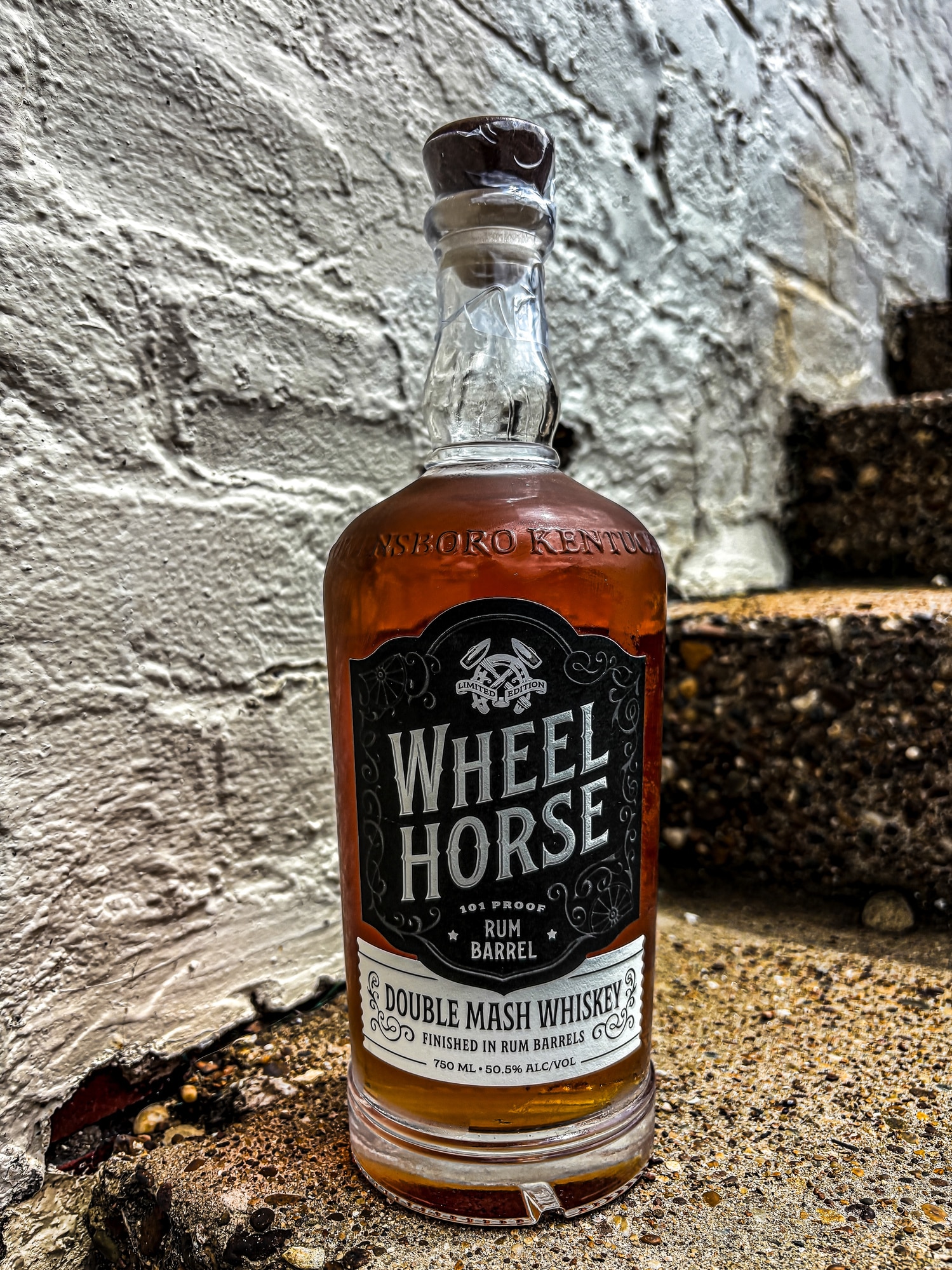
A collision occurred in 2026, when Latitude Beverage introduced Wheel Horse Rum Barrel Double Mash Whiskey at the brand’s signature 101 proof. The whiskey combines approximately 80% rye whiskey with 20% bourbon, using components distilled by Jacob Call during his tenure in Owensboro, Kentucky. The final blend was assembled by Barrel Master Stephen Corrigan in Rhode Island.
The release consists of 12 barrels built around Wheel Horse’s two primary mashbills distilled in Owensboro. The rye whiskey uses a mashbill of 95% rye and 5% malted barley, while the bourbon consists of 70% corn, 21% winter rye, and 9% malted barley.
Before secondary maturation, the bourbon ranged from 3 years and 10 months to 5 years and 2 months of age, with barrels dumped for finishing in February 2023. The rye whiskey ranged from approximately 4 years to 4 years and 6 months old before entering rum casks, with those barrels dumped between February and July 2024.
The bourbon and rye were finished separately rather than being blended beforehand. Entry proof into the rum casks ranged from 101 proof up to natural barrel proof.
The finishing barrels came from three sources. One group previously held rum from Appleton Estate in Jamaica, while the remaining barrels were identified only as “Caribbean rum” and “blackstrap molasses rum.” Corrigan said he had few specifics beyond those designations, although he believed none of the casks had previously held rum made entirely in pot stills.
Approximately two-thirds of the casks used in the final blend came from Appleton Estate, followed by blackstrap molasses rum barrels and then Caribbean rum barrels. About one-quarter of the blend spent time in two separate Appleton casks, with roughly 21 months in the first barrel before another three months in a second.
The final barrels were dumped in early May 2026 at a natural harvest proof of approximately 105 before being reduced to the bottled proof of 101.
Wheel Horse Rum Barrel Double Mash Whiskey brings together two trends that have largely developed on parallel paths. Is this a combination that consumers will want to experience more often?
Wheel Horse Rum Barrel Double Mash Whiskey Review
The influence of the rum casks makes itself known immediately, with a nose loaded with tropical fruit. Grilled pineapple, over-ripe banana, and toasted coconut arrive first, giving the opening more in common with rum than a rye-forward whiskey. As those sweeter aromas develop, the whiskey begins to show itself through notes of spearmint and orange zest. The overall profile stays sweet with very little spice, and the interaction between the rum casks and the whiskey works exceptionally well.
The palate follows a similar path, opening with the rum casks firmly in control. Bananas Foster comes to mind through flavors of over-ripe banana, vanilla extract, brown sugar, and cinnamon. As the sip progresses, the rye component begins to make its presence known with spearmint, accompanied by a silky mouthfeel. By the finish, the rye-forward whiskey takes command, delivering herbal anise and candied ginger before orange zest and light cinnamon provide the conclusion.
Having sampled most of Wheel Horse’s releases over the past several years, this easily ranks among my three favorites. The only expressions I place ahead of Rum Barrel Double Mash are the Barrel Master Rye and Barrel Master Bourbon, both of which are straight whiskeys without secondary maturation. Among the brand’s finished releases, however, this stands at the top of the list. The combination of rum cask sweetness and rye whiskey influence works exceptionally well, the proof lands right where it should, and the result is an excellent rum cask-finished bourye. As is often the story with Wheel Horse Whiskey, the price is fantastic.
101 proof.
A- / $40
Wheel Horse Rum Barrel Double Mash Whiskey
USD40