

Review: Silverthorn Reserve Blender’s Art Bourbon 10 Years Old and Single Barrel Rye 13 Years Old
Drew Thorn spent more than a decade helping build Sagamore Spirit from an ambitious startup into a nationally recognized whiskey brand. As the company’s CEO, he played a pivotal role in guiding its growth and establishing its place in the modern rye whiskey market. From the beginning, Sagamore Spirit’s identity was rooted in the blending of two rye whiskey mashbills, a philosophy that helped define the brand and one that Thorn has carried into his latest venture, Silverthorn Reserve.
Now serving as Master Blender of Silverthorn Reserve, Thorn has placed blending at the center of the company’s approach. In addition to blending projects that range from as few as two barrels to as many as ten, Silverthorn Reserve also offers single barrel ccuration and custom finishing. The company employs a slow-blending and slow-proofing process in which a blend is assessed before being returned to barrel for additional time to marry. Every release is bottled non-chill filtered.
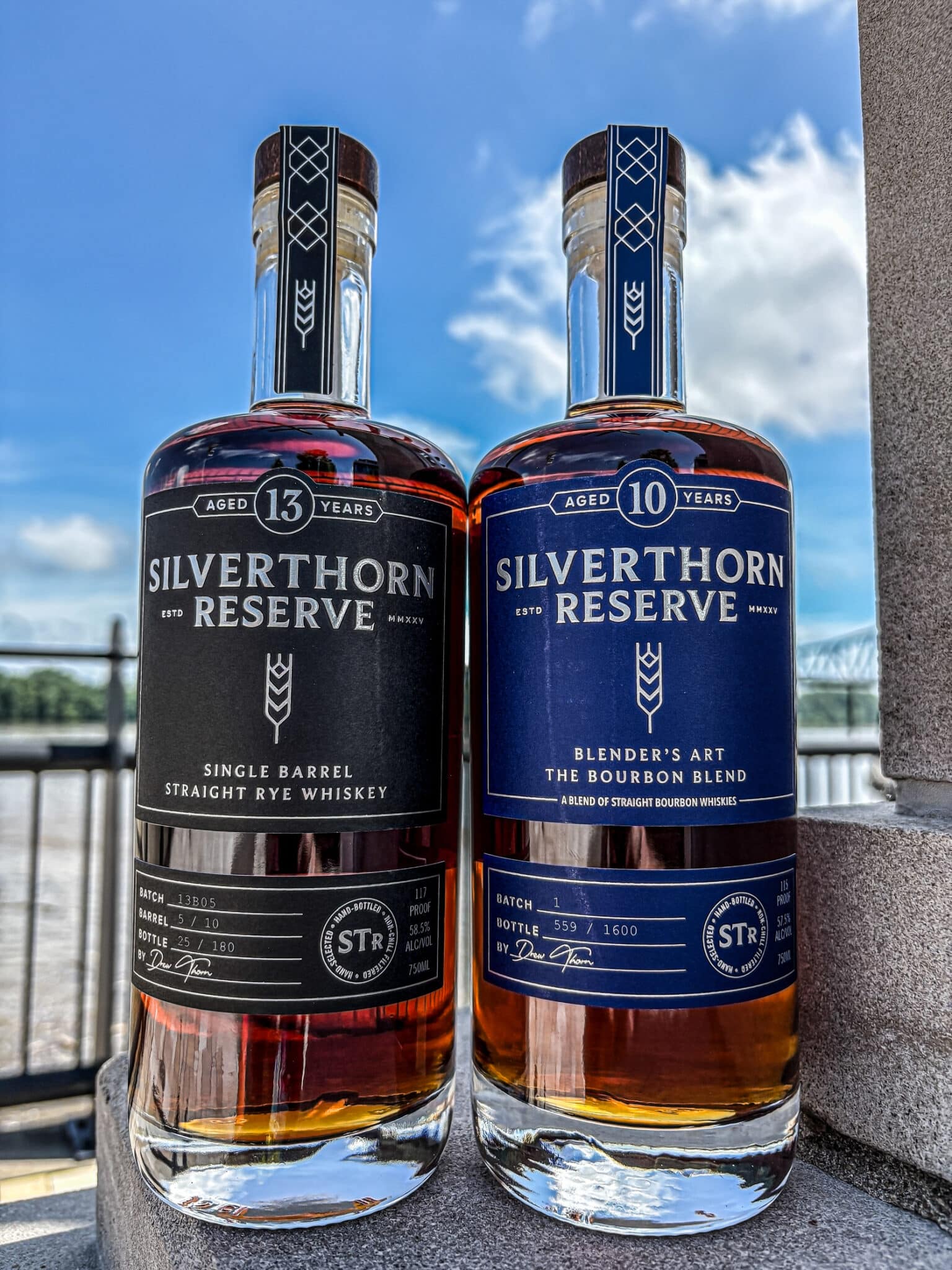
Silverthorn Reserve recently provided Drinkhacker with samples of two new releases: Silverthorn Reserve Single Barrel Rye Whiskey 13 Years Old and Silverthorn Reserve Blender’s Art: The Bourbon Blend 10 Years Old.
Over the course of his tenure at Sagamore Spirit, Thorn demonstrated a keen understanding of whiskey and the role blending can play in shaping a final product. Silverthorn Reserve represents the next chapter in that journey, offering an opportunity to see how his vision translates into a brand of his own. Every beautiful rose has its thorn. Can this Thorn offer the whiskey community another beautiful rose through Silverthorn Reserve? Let’s find out.
Silverthorn Reserve Single Barrel Rye 13 Years Old Review
Barrel No. 5 of Batch 13B05 was distilled by MGP in Lawrenceburg, Indiana, from a mashbill of 95% rye and 5% malted barley. The distillate entered an Independent Stave Co. barrel with a #4 char on February 5, 2013, and was dumped on May 12, 2026, after 13 years, 3 months, and 7 days of maturation. Although the whiskey was distilled in Indiana, Thorn sourced the barrel from Templeton Distillery in Iowa. Approximately the first five years of maturation took place in Indiana before the barrel was transferred to Iowa following the completion of Templeton’s facility.
Beyond its age statement, this release offers an interesting opportunity to examine how maturation environments can shape whiskey that began life from the same distillate. The American whiskey market has recently seen a number of 13-year-old MGP rye releases, many of which trace back to barrels sourced from Iowa. By comparison, bottlings from producers such as Circle City Whiskey Company are drawn from barrels that spent virtually their entire maturation period in Lawrenceburg. Barrel No. 5 yielded 31.62 gallons, reflecting a 40.34% loss to evaporation over its lifespan.
The nose arrives with spearmint gum and a surge of butterscotch. Given a few minutes in the glass, dill and raisin bread toast begin to join the aroma. Spearmint and dill are hallmarks of MGP’s 95/5 rye recipe, yet the extended time in oak reveals itself through the raisin bread toast note, setting this whiskey apart from the younger Indiana rye expressions most drinkers encounter.
On the palate, milk chocolate and peppermint combine in a manner that recalls an Andes Mint. Rye bread toast enters across the mid-palate alongside classic Indiana dill and a medium-thick viscosity. The finish opens with black licorice and lemon zest before tapering into a small thread of strawberry hard candy.
Through his time at Sagamore Spirit, Drew Thorn developed considerable experience with high-quality Indiana rye, and that background is evident here. This is an engaging rye whiskey from beginning to end. The oak remains in check throughout, allowing the brighter elements associated with Indiana 95/5 rye to remain clearly visible while tannic notes provide contrast.
Having recently tasted several 13-year-old rye whiskeys sourced from Templeton across multiple brands, I have found a consistent difference between barrels that spent years maturing in Iowa and those that remained almost entirely in Lawrenceburg. The Iowa-aged barrels tend to present with a rounder profile and less intensity than their Indiana-aged counterparts. This is an excellent rye whiskey and one I thoroughly enjoyed, though I ultimately find myself drawn more toward the profile delivered by barrels that spent their maturation years at MGP in Indiana. 117 proof. A- / $130
Silverthorn Reserve The Blender’s Art: The Bourbon Blend 10 Years Old Review
Batch 1 is composed of eight barrels and built from three separate whiskey components, each matured for at least ten years. All barrels were dumped for blending on April 29, 2026.
Ten percent of the blend comes from a single barrel distilled in Mount Airy, Georgia, by the now-mothballed Ivy Mountain Distillery. The bourbon was produced from a mashbill of 80% yellow corn, 10% rye, 5% white corn, and 5% malted barley. It entered an Independent Stave Co. barrel with a #4 char on February 16, 2012, reaching 14 years, 2 months, and 13 days of maturation. The first eight years were spent aging in northern Georgia, followed by five years in Bardstown, Kentucky, and a final six months in Maryland.
Sixty-six percent of the blend is sourced from five barrels of Kentucky bourbon distilled from a mashbill of 74% corn, 18% rye, and 8% malted barley. While Thorn declined to identify the producer due to a non-disclosure agreement, the whiskey was most likely distilled by Barton 1792 Distillery. These barrels were filled on April 28, 2016, resulting in exactly ten years of maturation.
The remaining 22% consists of two barrels distilled by MGP in Indiana from a mashbill of 51% corn, 15% rye, and 34% malted barley. Originally produced on behalf of Old Elk, the whiskey entered Seguin Moreau barrels on October 24, 2015, and matured for 10 years, 6 months, and 5 days.
All eight barrels were dumped and blended on April 29, 2026. The resulting blend was then returned to five of the original casks for several weeks before bottling on May 13, 2026. Natural harvest proof came in at 115.6 proof, with the final bottling adjusted slightly to 115 proof.
Baked pears and melted French vanilla ice cream lead the nose. With additional time in the glass, toasted coconut develops alongside a touch of tea tree oil. From the outset, this presents an aroma profile unlike any bourbon I have encountered before. It commands attention immediately.
The palate continues the orchard fruit theme through notes of Dutch apple pie, while over-baked sugar cookies provide a bakery-driven counterpoint. Mid-palate, mild prune juice and ground ginger arrive alongside a notably dense mouthfeel. As the whiskey moves into the finish, the ginger develops into gingerbread cookie, joined by an Andes Mint note that rounds out the experience.
This is one of the most unusual and rewarding bourbon profiles I have encountered in quite some time, which is hardly surprising given the makeup of the blend. Two of the three components come from sources that rarely find their way into projects like this. When unconventional ingredients are brought together with purpose, the result can be something genuinely memorable.
Drew Thorn took a considerable risk in building a bourbon around these whiskey stocks, and the gamble paid off. Rather than chasing convention, he assembled a blend that stands apart through originality and execution, delivering a profile that remains engaging from the first nosing through the final sip. 115 proof. A / $100
Silverthorn Reserve The Blender's Art: The Bourbon Blend 10 Years Old
USD100
Related posts:


