

Wine
While wine can be made from many types of fruits and flowers, it is iconically produced from fermented grapes. Wine production dates back at least 8000 years, and today it is produced in quantity in more than 70 countries, with Italy, Spain, France, and the United States the largest producers of wine today. The world of wine is vast and complex, with more than 10,000 grape varietals in existence. This is largely due to experimental cross-breeding and grafting that has taken place for millennia, and such experiments have led to some of today’s most popular grape varieties, including Cabernet Sauvignon and Chardonnay. The primary styles of wine today include red, white, and rose. While almost all grape juice itself is white, red wine is made by allowing the juice from black (aka red) grapes to ferment in contact with its skins, while white wine is usually (but not always) made from white grapes. Rose wine is made from black grapes with limited skin contact, which provides the pinkish color.
Top Wine Posts:
Understanding the Wines of France
Wine and Beer Touring in California’s Paso Robles, 2017
Touring and Wine Tasting in California’s Anderson Valley
Harvest in Chile’s Casablanca Valley – A Dusty Paradise
Chateau Montelena’s Dream Tasting: A Retrospective of Five Decades of Wine
Exploring Port Wine: Touring Porto and the Douro Valley
Visiting Tuscany’s Tenuta dell’Ornellaia

The good folks at Gallo Family Vineyards (see prior review here) were kind enough to send along a four-pack of mini-bottles of Twin Valley Chardonnay, a non-vintage white that’s as close to a “picnic wine” as you’re likely to find. Like “summer wine,” the “picnic wine” term comes loaded with baggage. It implies an easy-drinking,…

Italian sparkling wine gets little love, and is often hard to find in the U.S., so it was a real treat to get to try a dozen or so Proseccos at a recent event in San Francisco, offering that rare chance to taste numerous producers and varieties side by side. First, a little primer: Prosecco…

Sake continues its slow but inexorable push into American cocktails and bottles, this time with Gekkeikan’s Zipang Sparkling Sake beverage. Like saké2me, Zipang is a single-serve bottle (though larger, at 250ml). Unlike saké2me though, Zipang isn’t flavored, it’s literally just sake given a light carbonation. If you like sake, you’ll really enjoy Zipang. Served nice…
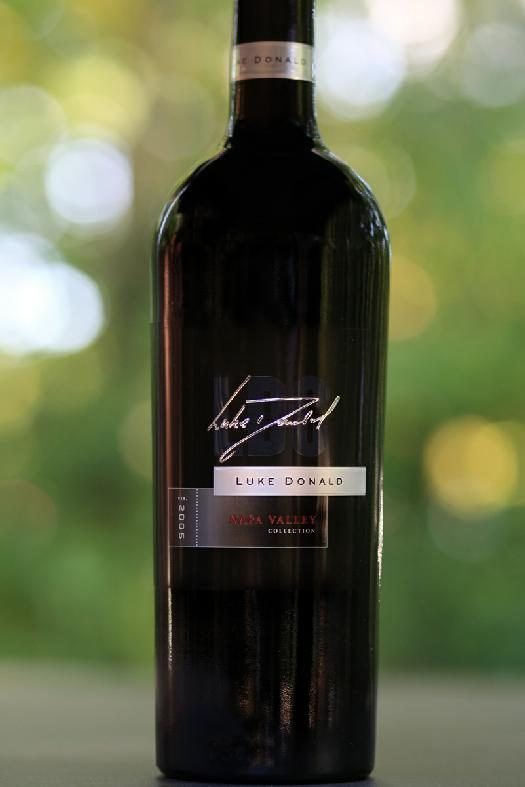
For those whose TVs remain off on Sunday afternoon, Luke Donald is a PGA golfer, and Luke Donald Collection is his new wine label. Produced in the Rutherford region of Napa Valley (and blended from grapes grown throughout Napa), the otherwise unnamed Luke Donald Collection red is a Bordeaux-style blend of 44% Cabernet Sauvignon, 43%…

I doubt I’ll be dropping by Caduceus Cellars any time soon. The wine is made in northern Arizona, far away from the Wine Country as I know it. Fret not: Caduceus is not trying to make wine from local desert grapes: M.J. Keenan brings in hand-picked grapes from Ranchita Canyon Vineyard, in the well-regarded Paso…

Uncomplicated and full of lush fruit, Sebeka makes for a perfect introduction to South African wine. What, you didn’t know they had wine in South Africa? They do, and it’s generally pretty good. Sebeka’s Cape Blend is 60% Shiraz and 40% Pinotage, a grape bred in the ’20s as a cross between Pinot Noir and…
I had my first — and only — bottle of Sean Thackrey’s wine on May 24, 2002, a bottle of the 1995 Orion (which the label professed not to know what grape varietal it was made of but which was likely Syrah), which I found in a mixed case lot at a Bonhams & Butterfield…

Founded in 1861, Charles Krug is Napa Valley’s oldest winery. I know this because it says so right on the label of Krug’s 2005 Cabernet. Now operated by Peter Mondavi and his family, Krug wines are still alive and kicking. The 2005 Charles Krug Cabernet Sauvignon Yountville – Napa Valley is actually a curious blend:…

Sonoma County’s vintners threw an enormous event in a far-too-small and wholly-unorganized ballroom at San Francisco’s Four Seasons this week, showcasing some of the areas wines (in fact, all 13 Sonoma County AVAs were represented). I only managed to taste a small fraction of the more-than-100 wineries pouring at the event, but some truly inspired…

Created from grapes grown throughout Australia’s Barossa Valley, Barossa Valley Estate’s E Minor bottlings are real mutts of a wine, the product of labors of some 60 growers. Can a wine created from grapes from dozens of vineyards be any good? Let’s find out. 2005 Barossa Valley Estate E Minor Chardonnay is a new world…